.svg)
Scaling a Food Delivery App Beyond Your First City
 By Infinitietech Team1 min read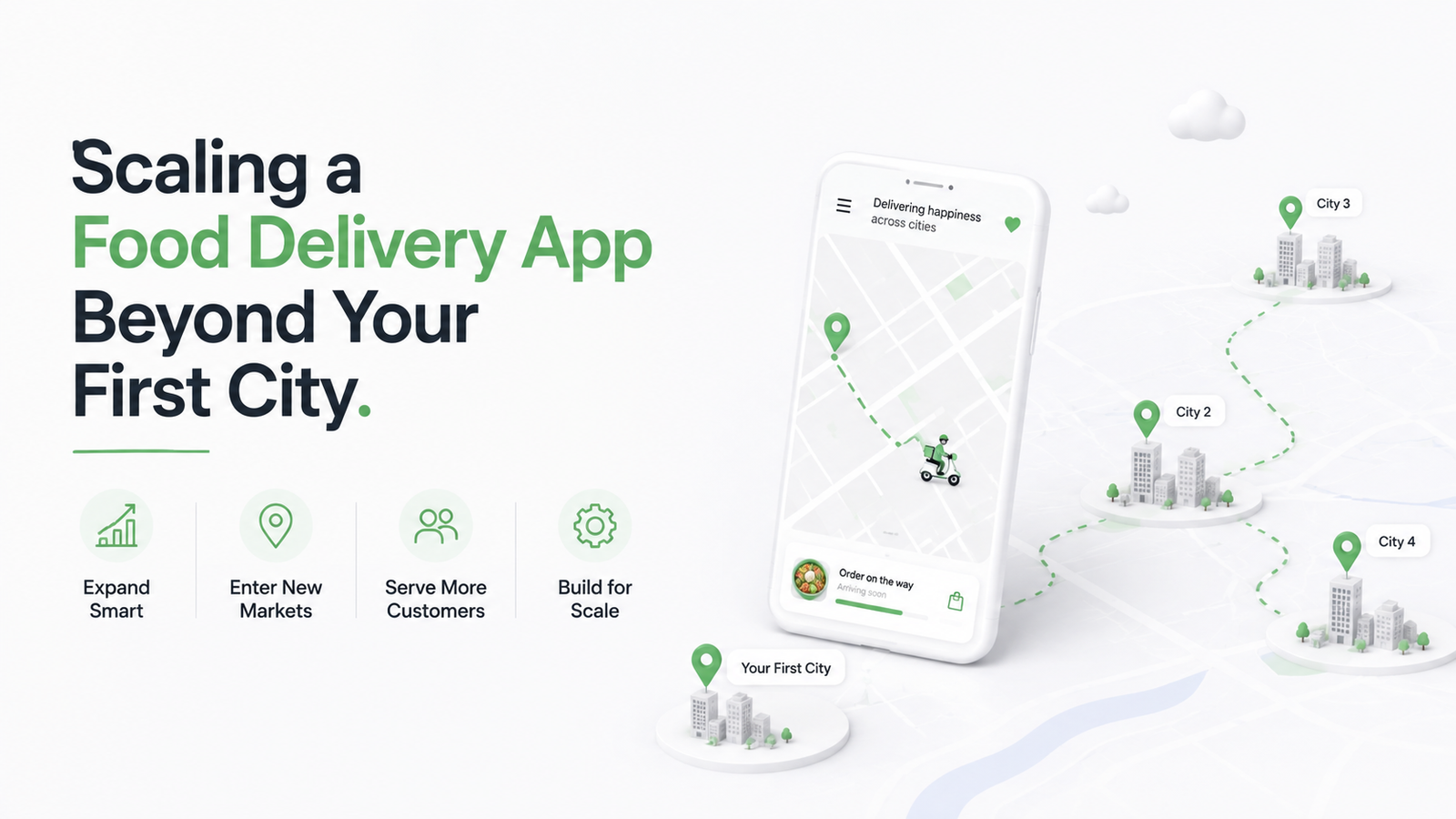
Multi-city vendor onboarding, delivery zone pricing, and the infrastructure decisions that make or break expansion.
City two is where food delivery platforms usually break — not from traffic, but from every assumption that was quietly hard-coded for city one: single-zone pricing, one onboarding flow, one operations team's habits.
Make geography a first-class concept
Before expanding, your platform needs zones as real data: per-city commissions, delivery fees, taxes, and operating hours. If changing a delivery radius requires a developer, expansion will stall at the operations desk.
Vendor onboarding is your growth engine
- Self-serve vendor registration with document verification
- Menu bulk-import instead of manual data entry
- Per-city commission and payout configuration
- Training material vendors can complete without your team
Infrastructure that scales with orders
Peak dinner load in three cities is a different beast from one. Queue-based order processing, read replicas for reporting, and per-zone dispatch keep the experience identical whether you run one kitchen or three hundred.
The takeaway
Expansion is a configuration problem when your platform is built for it — and a rewrite when it isn't. Choose the architecture that treats every new city as a row in a table, not a fork of the codebase.