.svg)
Reskinning vs. Custom Software Development: Choosing Your Path
 By Infinitietech Team2 min read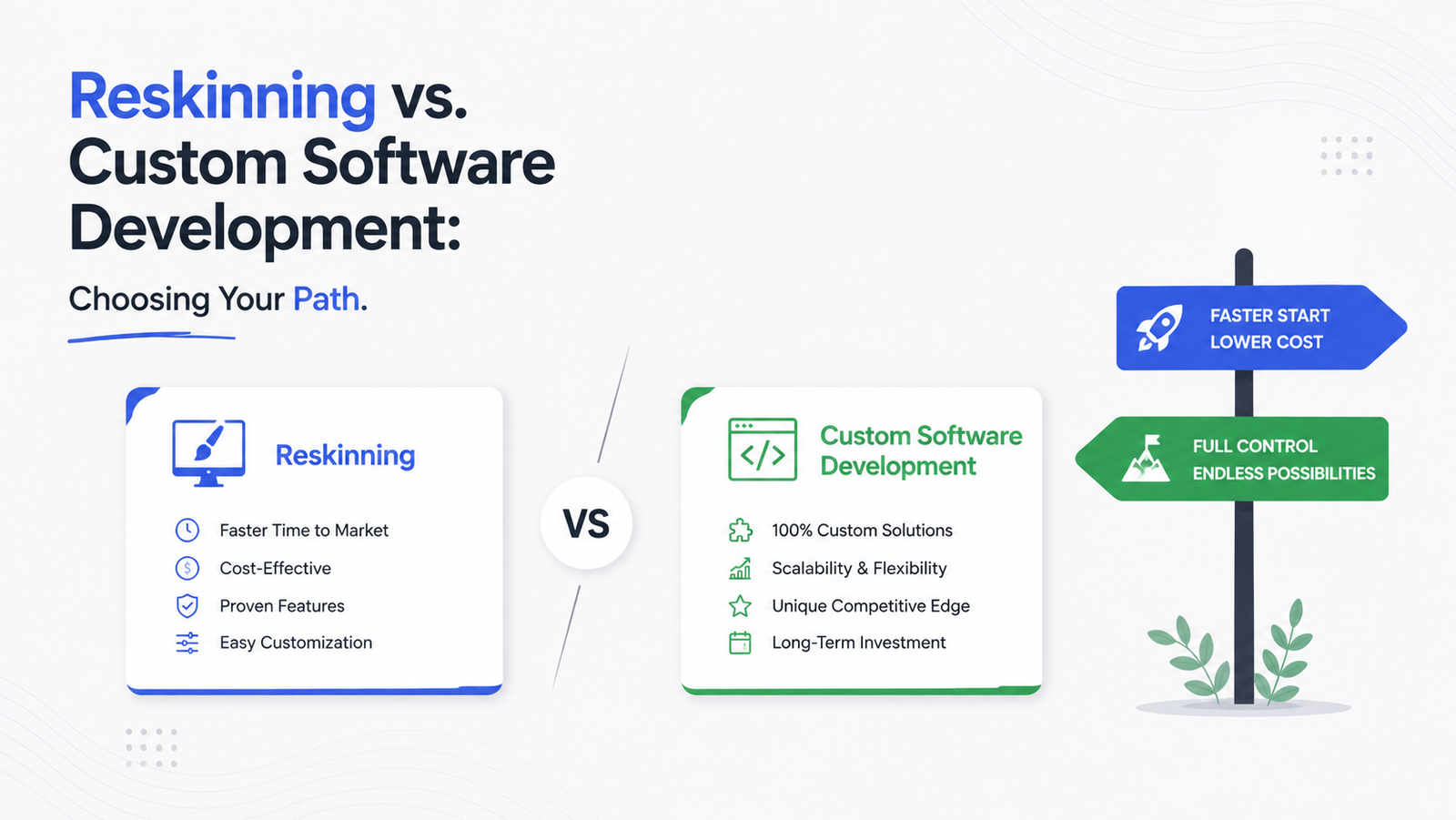
Development cost, launch timeline, and long-term ownership — an honest comparison for early-stage startup founders.
Every founder eventually faces the same fork: build the product from scratch, or start from a proven codebase and make it yours. The honest answer depends on where your idea is genuinely different — and where it isn't.
What reskinning really means
Reskinning is not slapping a logo on a template. Done properly, it's a full brand application — colors, typography, store assets, splash screens — on top of a battle-tested engine, published under your own developer accounts. Users see your product; you skip the year of foundational engineering.
When custom development wins
If your core differentiator is a workflow no existing product models — a novel pricing engine, a unique operational flow — that piece deserves custom engineering. The smart move is usually hybrid: proven engine for the 80% every app shares, custom modules for the 20% that makes you different.
The comparison that matters
- Timeline: weeks (reskin) versus 6–12 months (scratch build)
- Budget: a fraction of custom cost, spent on differentiation instead
- Risk: production-tested core versus unproven new code
- Ownership: both paths end with code in your repository
The takeaway
Buy the parts of your product that aren't your idea. Build the part that is. That's how funded teams ship in weeks without betting the runway on infrastructure.